The origin story

How we got here

Every app has a beginning. ReddUp’s started with a spreadsheet I didn’t want to build by hand — and turned into a quiet mission to lift the fog off your finances. Here’s the whole road, start to finish, in my own words.

We don’t load YouTube until you press play.
01The spreadsheet

The spreadsheet that started it

It started with a chore. At work I was handed our quarterly budgets and asked to build the Excel spreadsheets by hand — every quarter, the same careful, mind-numbing assembly.

I remember thinking: why am I doing this by hand if I can write a program to do it for me? So I did. That little program was my first app — I called it Make The Boss Happy — and all it did was take the financial data and spit out clean Excel budget workbooks.

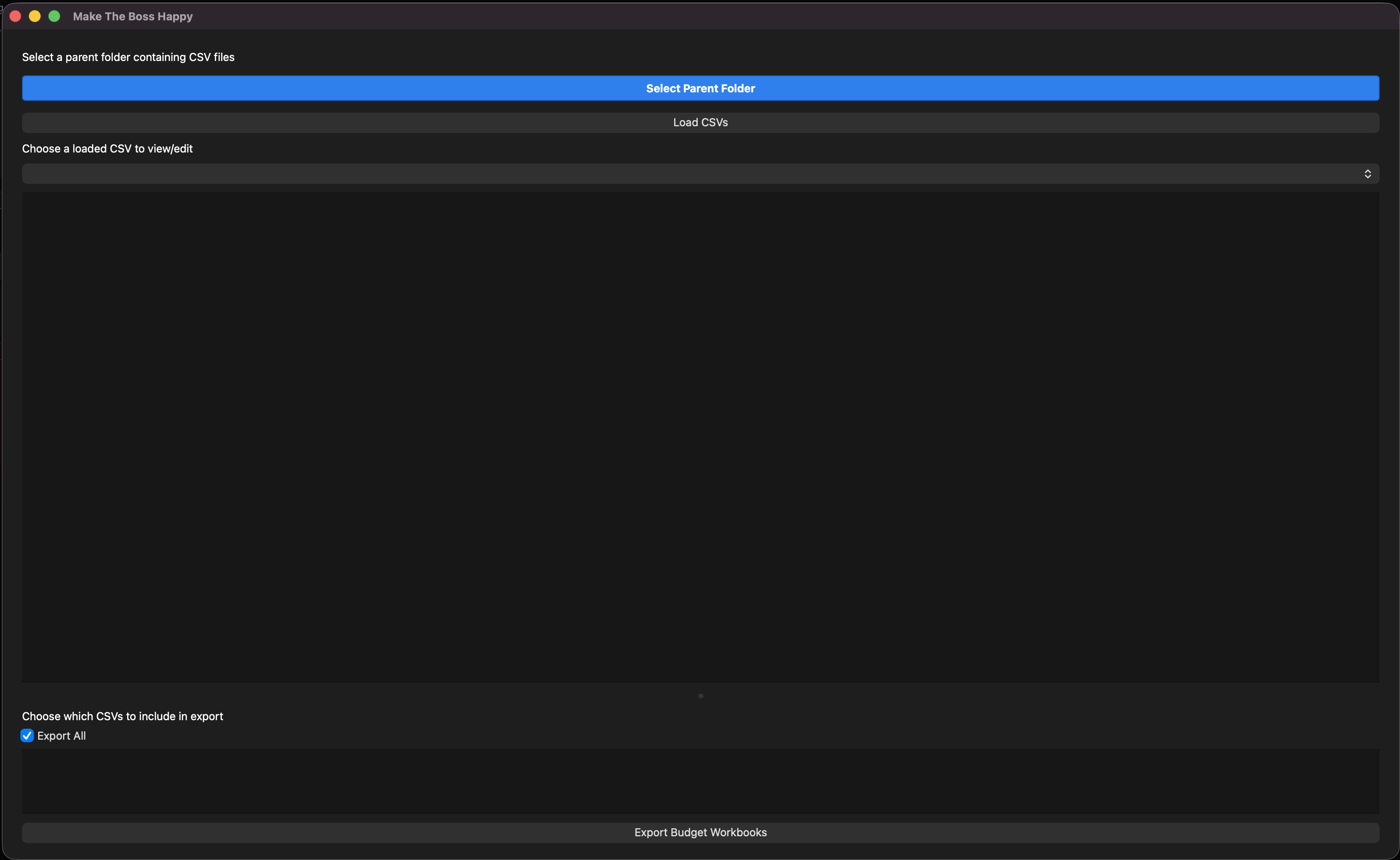
The first 'Make The Boss Happy' — a bare window with Select Parent Folder, Load CSVs, and Export Budget Workbooks.
Make The Boss Happy, day one — three buttons and a job to do.
The 'Make The Boss Happy' app icon: a cheering businessman surrounded by dollar signs.
The icon said it all: a cheering businessman, surrounded by dollar signs.
02What if I scaled this?

What if I scaled this?

Once it worked, I couldn’t leave it alone. One useful feature led to the next, and the next. Importing got smarter. Editing got real. Exporting grew up.

Before long that weekend hack had become a substantial desktop app — mostly Python under the hood — that could pull data in, let you shape it, and push it back out. It was doing serious work now. It was still wearing the same cheeky name.

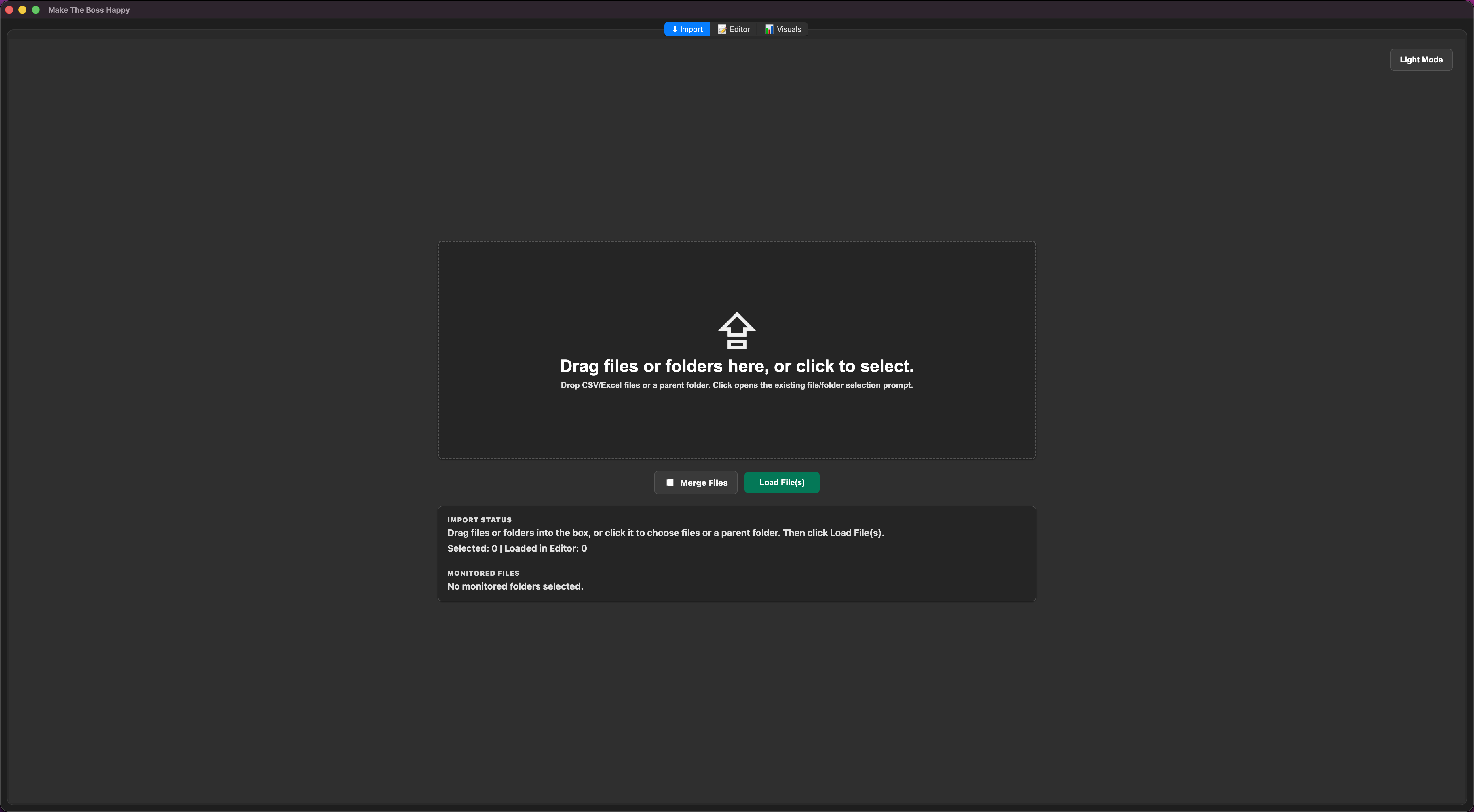
A later 'Make The Boss Happy' import screen with a drag-and-drop area and Load Files.
A real import screen — drag your statements in, or hit Load Files.
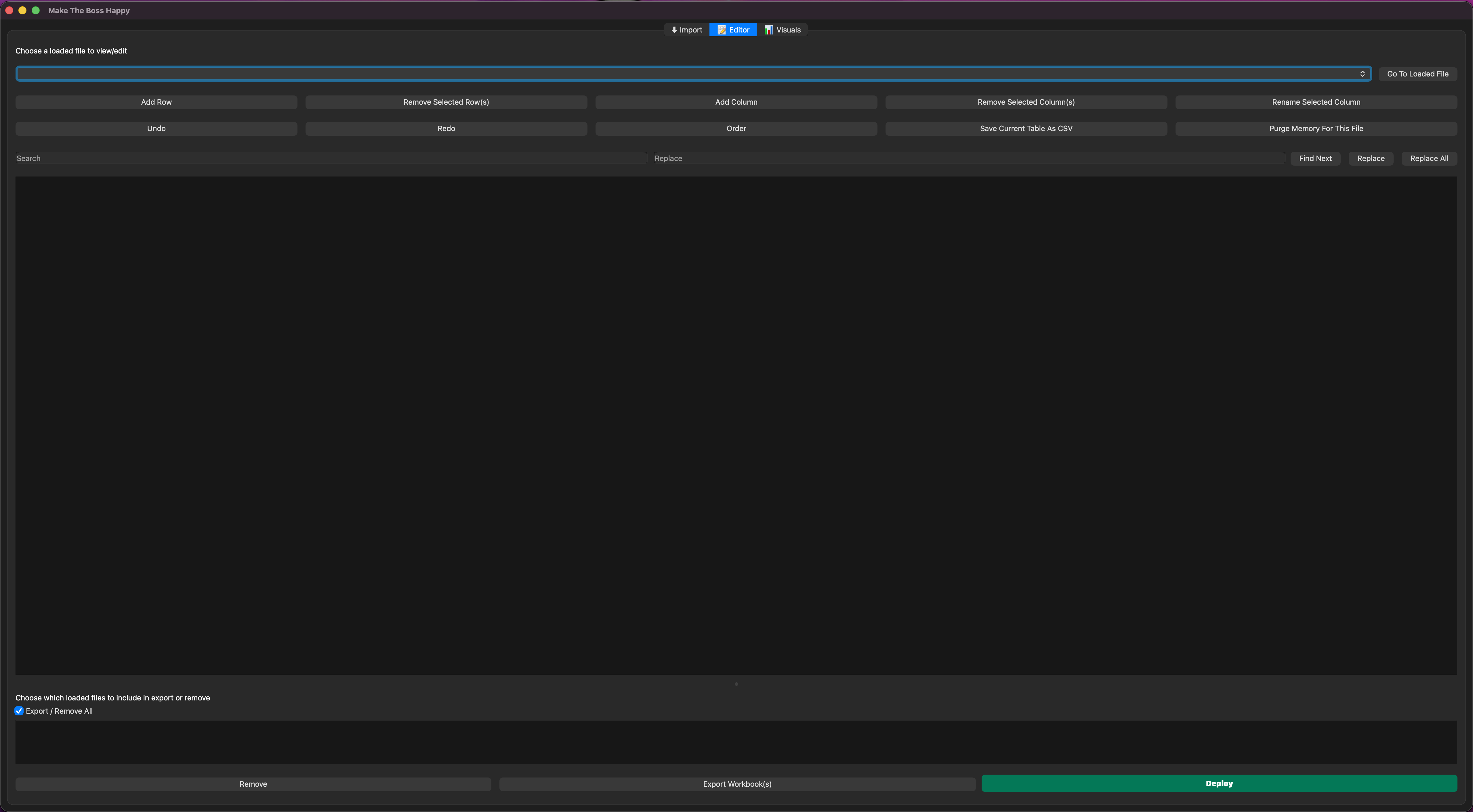
The 'Make The Boss Happy' editor: add/remove rows and columns, undo/redo, search and replace.
The editor: add and remove rows and columns, undo/redo, search and replace, deploy.
03Rebuilt

Rebuilt from the ground up

Then one day I did the hard thing: I tore it down and rebuilt it as a proper application. A Tauri 2 shell written in Rust, hosting a vanilla JavaScript and Tailwind interface, with the whole engine running as its own Python process shipped as a sidecar — the two halves talking to each other over JSON on stdin and stdout.

Months of changes, tests, late nights and early mornings later, it was finally ready for the world. This time it was built to last.

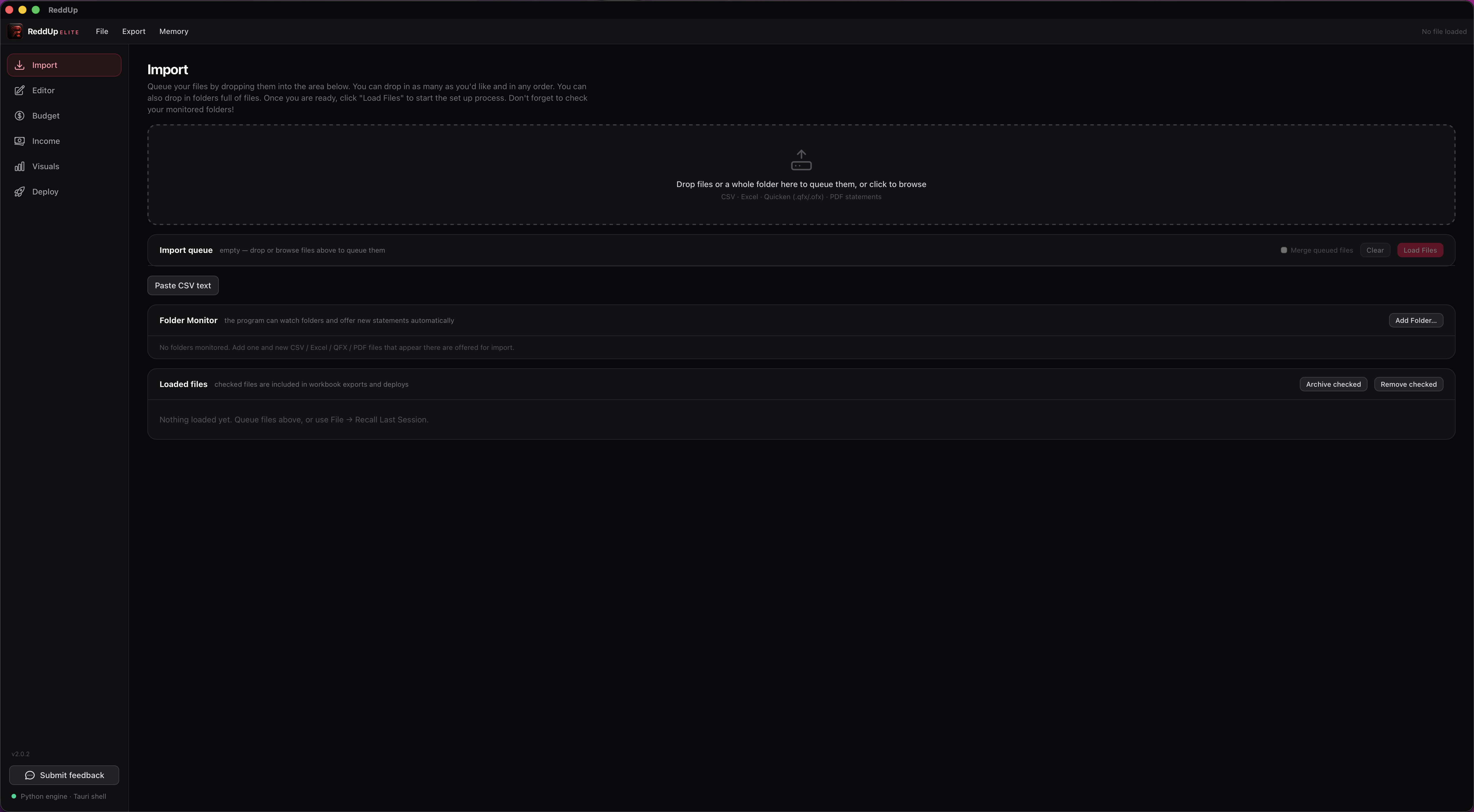
The finished ReddUp ELITE app, with a sidebar for Import, Editor, Budget, Income, Visuals, and Deploy.
The finished article: ReddUp ELITE, polished and ready — Import, Editor, Budget, Income, Visuals, Deploy.
04The name

Finding the name, “redd”

I spent months on the name. Every cool one was already taken, so I went digging — through Greek, Latin and Hebrew, through history, looking for something that fit.

Then I found a small, almost-forgotten word: redd. I’ve always loved a deep, dramatic red — and as it turns out, “redd up” is a Scots and Northern-English phrase meaning to tidy up, clear out, and set in order. Which is exactly what this program does to your finances. It just clicked.

05Why

Why — financial clarity

Here’s the honest part. So often we’re a little afraid to look at our money — unsure what’s really happening to it, unsure what to do with what we’ve got. That fog is heavy, and it keeps good people from good decisions.

ReddUp exists to lift it. To hand you clarity — the whole picture, in plain language — so you can make the best decisions for your future. That’s the whole reason any of this got built.